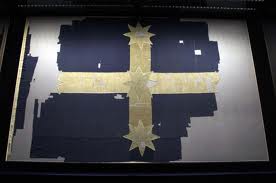
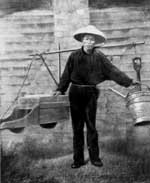
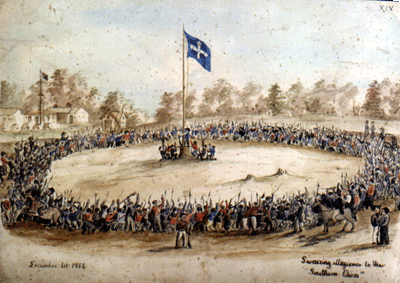
Gold throughout the nation In fact, after the discoveries of gold in New South Wales and Victoria, deposits of gold were found throughout Australia. Only South Australia was unyielding. Western Australia's first discovery was in the 1850's, Queensland in 1853, The Northern Territory in 1865 and finally in Tasmania, at Beaconsfield in 1877. Multiculturalism at the goldfields After the Victorian gold rush, a journey of extraordinary volume started, leading to Australia people with a range of abilities and employments. Australia appealed to many adventurers from all around the world. Though most of them were British, Americans, French, Italian, Polish, German and Hungarian also joined in the Australian gold rush. But the vastest foreign nationality on the goldfields were the 40,000 Chinese that arrived in Australia. Chinese migrants made up 3.3 per cent of the population in 1861, the largest it has ever been. The Chinese were mainly all men, [There were only 11 women!] and most had a contract with foreign businessmen. In exchange for the cost of migrating, they laboured on the goldfields until their outstanding payment was paid off. Most of the Chinese would then return to China. From 1852 to 1889, there were 40,721 arrivals and 36,049 departures. Unfortunately, there were campaigns to banish the Chinese from the goldfields. The main reasons were based on racism and competition, as the Chinese often found quite a lot of gold compared to the Europeans. Tension on the goldfields The diggers on the Turon goldfields were enraged at the price of licensing fees, and even threatened to riot! The monthly cost of 30 shillings was expensive and hard to pay in difficult times. The claim was small, being only 13.5 square metres on the surface, making it extremely agonising to work. Governor Fitzroy, the governor of New South Wales, intelligently reduced the cost by two thirds, but did not make any changes to how it was collected. Police would check that diggers on the goldfields had paid the licensing fees, and the diggers nicknamed them the 'digger hunts'. Police would come down to the goldfields to find diggers who hadn't paid. They were thrown in front of the magistrate and were fined £5 for their first crime, and the fine doubled each time they were caught. But as everyone hated the digger hunts, police had to start to use more force. The Eureka Stockade Between 1851 and 1854, pressure was starting to build up on the goldfields. Arguments between the diggers and authorities became more often with compelling dissatisfaction, due to the abuse of the goldfield licensing system and police exploitation. Ballarat in particular, tension was building up like anything. The Ballarat Reform League was created and was lead by Peter Lalor, an Irish Engineer. He and his companion rebels were a very diverse and bold group, including Frederick Vern, a Prussian republican, Raffaelo Carboni, the Italian redshirt, and Tom Kennedy, the Scottish Chartist. In December 1854, 1000 men assembled at Eureka, on the edge of Ballarat, and unrolled their flag, a cross with white stars on a blue background, and proclaimed their oath: We swear by the Southern Cross to stand truly by each other, and fight to defend our rights and liberties. Unfortunately, troops from Melbourne defeated the stockade and slayed 22 of its defenders. |
||||
 |
 |
 |
||
